SPUCS: Software architectures for Secure, Private, User-Controlled Smart devices
Smart mobile devices are ubiquitous and critical for our everyday lives. These devices comprise a massive amount of proprietary software from different vendors with limited transparency and user control. SPUCS contributes new software architectures and methods for increased transparency and control over smart devices. Technically, the project focuses on mobile devices running operating systems based on the Linux kernel, like the Android OS, the most popular operating system in the world.
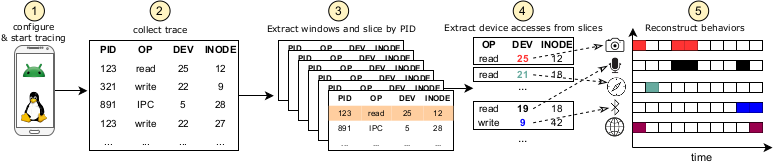
SliceDroid is a technique for capturing and processing traces from the OS kernel that is agnostic to the semantics of the higher-level proprietary software components of Android. Therefore, it can be used to extract behavioral information and monitor the execution of all apps and system components, offering transparency to end-users. An open-source implementation is available on [Github].
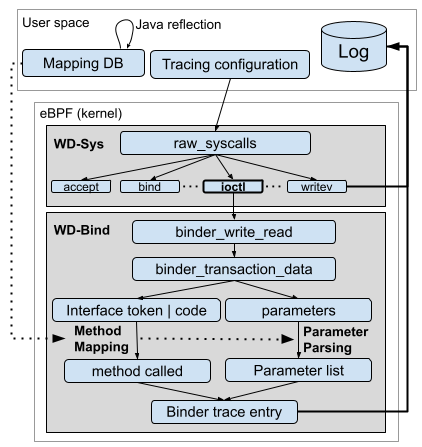
Coming soon.
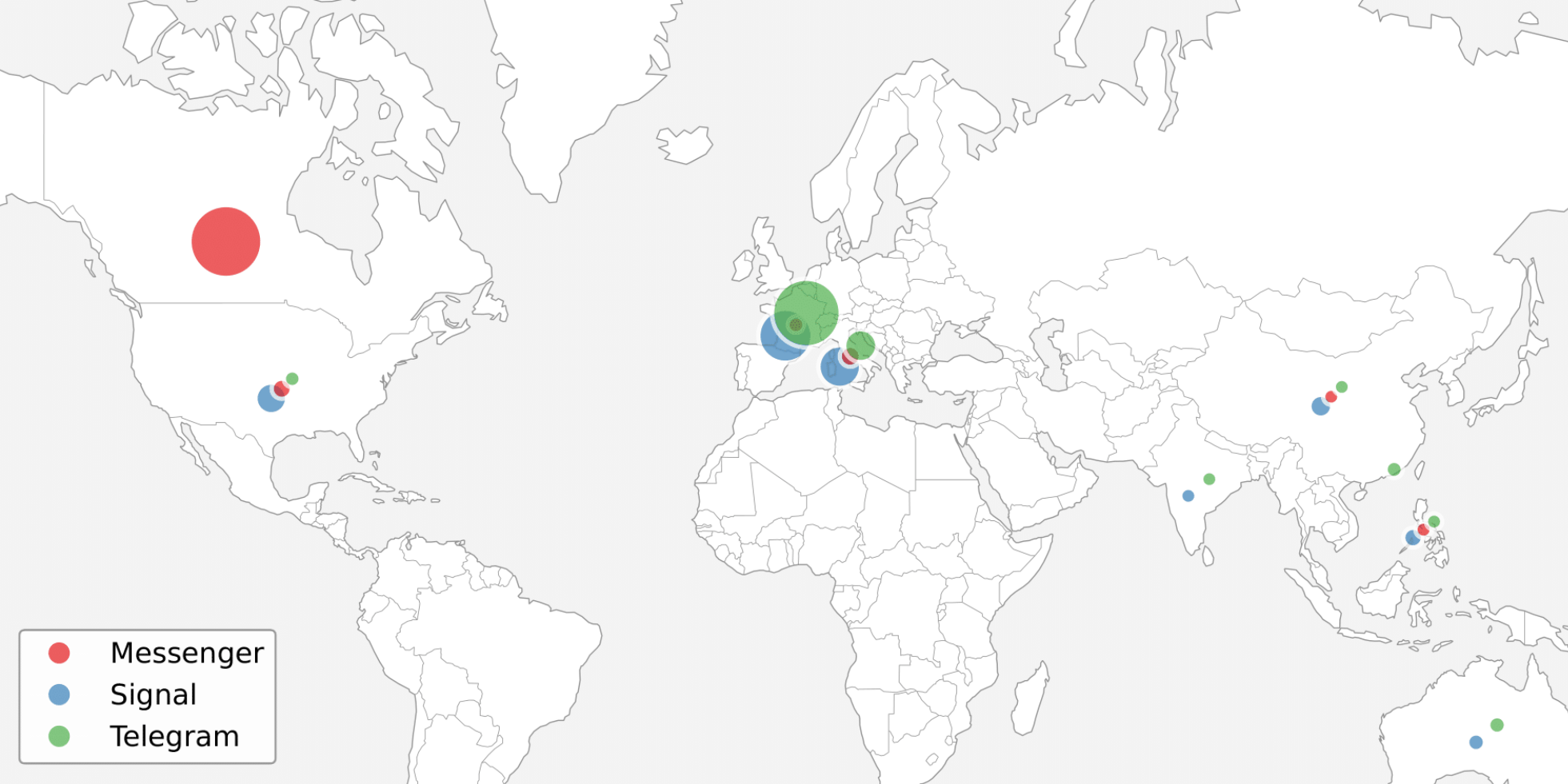
Together with students from AUEB, we investigated the security and privacy characteristics of messaging applications for Android. Via a combination of static and dynamic analysis techniques, including behavior monitoring using SliceDroid, we examined discrepancies in the behavior of the Meta Messenger, Signal, and Telegram apps.
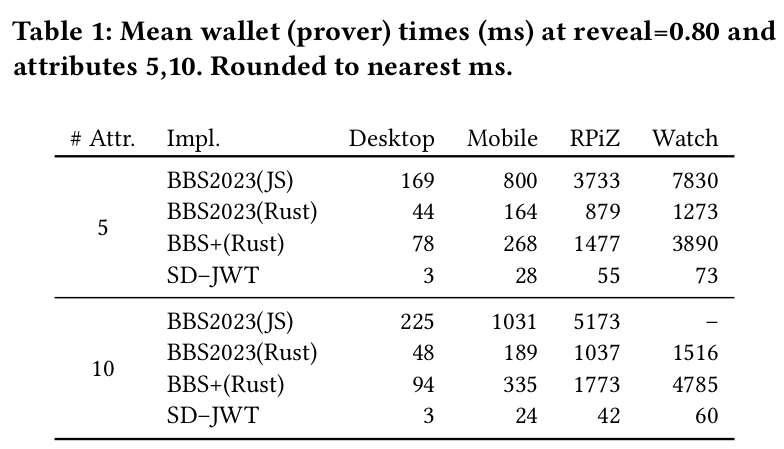
In this work, we designed and implemented a benchmarking suite for implementations of unlinkable verifiable credentials. Our results showed that BBS signatures can offer increased privacy to end-users of mobile devices while incurring a modest overhead, even in wearable-class devices, such as smartwatches.
Researcher: Nikolaos Alexopoulos
Host Institution: Athens University of Economics and Business
Email: alexopoulos AT aueb.gr